
Football Sizes Chart
One of the most common questions we run across with our monthly football kicking camps and clinics is “what brand & size football should I be using for kicking practice?”
This guidance is based on thousands of real kicks observed in private lessons, camps, and game environments—not manufacturer charts.
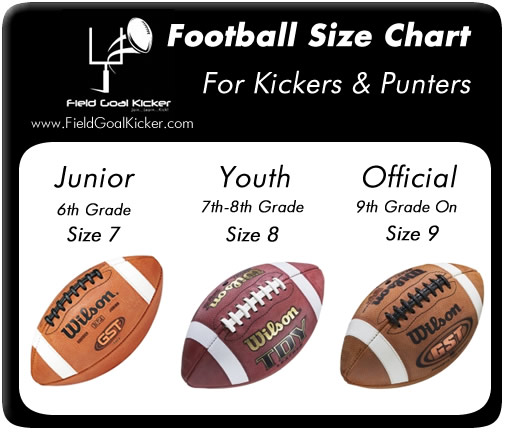
This chart graphic gives you a quick visual of the different basic football sizes there are for kids at different ages.
As you can see, we start at SIZE 9 for high school kickers (official size) and go down from there.
PEE WEE footballs: I’m showing sizes 9, 8 and 7 in the football size chart graphic I made, but in the table below with links to buy online, I’ve included the smallest size 6 (Pee Wee) for elementary school kickers. If you’ve got a kick getting started in this age range, you’ll need the appropriate size ball for these little guys to use. My youngest student is around the 3rd grade. I’ve had a few through the years and yes, they can make extra points at that age in games!
Brand Recommendation: Below is a table with AMZ links to the Wilson GST footballs I’d recommend with my students today, by size, age range, and material. I know I’m showing a Wilson TDY football in the chart above, but for high school, the GST (Game Saver Technology) is considered the GOLD STANDARD, chosen by many state HS associations.
Composite VS Leather: For younger or recreational high school players, composite leather options are sometimes used, but varsity, competitive, and state-level games almost exclusively use high-grade leather.
| Size/Age | Football |
|---|---|
| Official Size / High School | Composite |
| Leather | |
| Youth Size / 7th-8th Grade | Composite |
| Leather | |
| Junior Size / 6th Grade | Composite |
| Leather | |
| Pee Wee Size / 5th Grade Down | Composite |
| Leather |
Other Football Brands to Consider
Yes, Wilson is used by roughly 26 state high school associations, but I personally carry Nike and Adidas in my lesson bag as well for my high schooler age students to kick. I like older students especially to see and feel the brands that D1 programs use, like the Nike Vapor Elite (University of Georgia, Clemson, etc) or the Adidas Dime (Georgia Tech, Miami, etc).
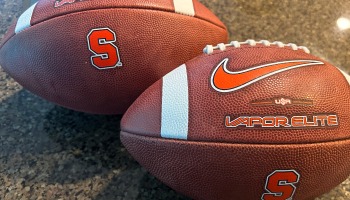
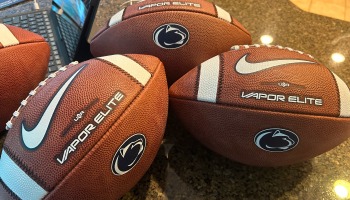
I want my students to understand that footballs are the same basic shape, and they do they same basic thing when kicked or punted. They rotate end over end when kicked, spiral when punted properly.
My advice for parents and students early on?
“Don’t get married to one brand or one material. Learn to kick a variety of footballs and be comfortable with the ball in front of you. Some leather footballs will go further than others depending on how they are prepared and/or how broken in they are. Composite balls typically go a little further when kicked than leather balls. Kick them all!”
In other words, don’t become so attached to a favorite football early on that you lose all confidence kicking any other football presented. I had a student years ago who took his favorite football into a ranking event and when they told him he had to kick their camp footballs, he mentally collapsed. He became so frustrated, he missed every kick he attempted because he lost his composure and didn’t focus.
How to Pump Footballs for Kicking
Air in a football matters. Air pressure in a football acts as a “shock absorber”; higher pressure increases distance and speed, while lower pressure makes the ball softer, reducing distance and altering accuracy due to energy absorption. Properly inflated balls (8.5–15.6 PSI) maximize energy transfer, whereas under-inflated balls deform on impact, wasting energy and feeling sluggish.
The number one ‘football’ issue I see with students who show up for lessons with their own footballs, is that they are most often ‘under pumped’ because the student likes the softer feel on the foot.
Based on my introduction in this section, this under inflation can be an issue long term for students learning to kick. I have found that the softer, cushy feel many students like is around 9.5 to 10 PSI when I test.
They should be more in the range of 10.5 to 11.5 for leather footballs, which is what many of the ranking camps use as a standard when measuring kicker performance at their events. I personally pump my student leather practice footballs to 11.5 PSI for this reason.
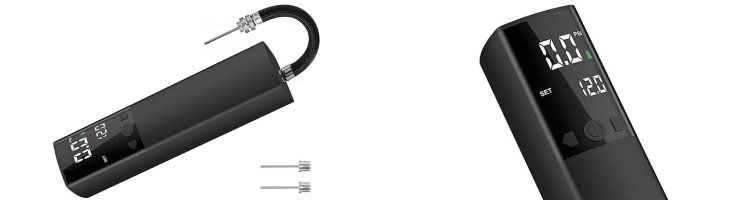
So, what’s the best way to stay on top of air in a football? It can be a task, as PSI regularly lowers every week or two I’ve found in my bag of leather footballs. I recommend keeping an electric pump in your kicking bag and quickly bringing the football to the proper PSI before each kicking session.
Here is the exact electric pump in my bag, and I’ve linked to it because it’s been a solid, fail safe tool as long as you keep the batteries charged.
 About Coach Scott
Georgia Tech Hall of Fame Member, All-American and former NFL placekicker. Scott coaches kickers (and parents) with a simple goal: building a repeatable process that holds up under pressure.